Showing posts with label Inspirational stories. Show all posts

Tuesday, June 12, 2012

Cycling 32 km each day

"A primary school teacher in Dharmapuri district in Tamil Nadu has bicycled 32 kilometers each day for the past 20 years without missing a single day of school." This appeared in Times of India in May 2005.

Because of his commitment and also his ability to inspire students, a surprising number of his former students went on to become hugely famous. When asked about the roots of his motivation, he answered, "Teaching is my dharma."

In contrast to the above case, a study on government primary school teachers in India revealed that one out of four teachers is absent and one in four, although present, is not teaching. Thus one out of two teachers in our primary schools is not doing his/her job.

I read the above facts in a book titled, The Difficulty of Being Good by Gurcharan Das. I tried to search in the internet for the name of the teacher mentioned in the first paragraph of this blog. I could not get it. I would have felt lot more happier if I could have mentioned his name. Anyways, I admire his sincerity.

I am reminded of a Tamil couplet, its rough translation may be given as follows:

Establishing a thousand free food distribution centres
Building 16,000 temples
More rewarding than all those
Is educating one poor person

I truly admire the dedication of that primary school teacher of Dharmapuri. May his tribe expand and flourish.  

Thursday, May 31, 2012

Great Spiritual Teachers – Why a life of suffering?

The lives of the ten Sikh Gurus, or the life of Jesus Christ, or Gautham Buddha, or Sri Ramakrishna, or Swami Vivekananda, or any other great saint who attempted to teach the world had always been a life of extreme suffering. We, ordinary humans, may ponder over this fact and enquire, “They lived like us, suffered like us. Why should they be looked upon as partial incarnation of God and hence worshipped as God? How can they show us the way? In which way do they differ from us?” Here is a story to understand the role, the mission, of all our great spiritual gurus (teachers).

Once upon a time, there lived a farmer who didn't believe in God but his wife, however, did believe, and she raised their children to have faith in God and in the teaching of gurus, despite her husband's disparaging comments.

One dark evening, the farmer’s wife was taking their children to a shrine near the place they lived. She asked him to come along, but as expected he refused. "All that is nonsense!" he said. "Why would God lower Himself to send a part of himself to earth as a man if God is really such a great soul as you say?  That's ridiculous.” So she and the children left, and the farmer stayed home.

A little while later, the winds grew stronger and the darkness turned into a dust storm. As the man looked out of the window, all he saw was a blinding storm with dust taking over everything outside. When he sat down to relax, he heard a loud thump. Something had hit the window. He looked out, but couldn't see due to dust filling his eyes.

When the storm settled down a little, he peeped outside to see what could have hit the window. In the field near his house he saw a flock of pigeons.

Apparently, they had been sitting on trees nearby when those poor pigeons got caught in the dust storm and couldn't reach their destination. They were lost and stranded on his farm with no food or shelter. They just flapped their wings and flew around the field in low circles, blindly and aimlessly. Probably, a couple of them might have banged into the window. The man felt sorry for those pigeons and wanted to help them. ‘The big store room outside would be a great place for them to stay’, he thought. It will be warm and safe; surely they could spend the night and can wait for a bright morning. So he walked over to the store room and opened the doors wide, then watched and waited, hoping they would notice the open store room and go inside. But innocent birds just fluttered around aimlessly and didn't seem to notice open doors or realize what it could mean for them.

The man tried to get their attention, but that just seemed to scare them, and they moved further away. He went into the house and came with some grains, spread them, and made a trail leading to the store. They still didn't catch on. Now he was getting frustrated. He got behind them and tried to shoo them toward that big store room, but they only got more scared and scattered in every direction except toward open doors. Everything he did could not get the birds to go into the room where they would be warm and safe.

"Why don't they follow me?!" he exclaimed in anger. "Can't they see this is the only place where they can survive the storm safely?" He thought for a moment and realized that they just wouldn't follow a human. "If only I were also a pigeon, then I could save them," he said loudly.

Then he had an idea. He went into the store, got one of his own domesticated pigeon, and carried it in his hands as he circled around behind the flock of poor storm struck pigeons. He then released it.... His pigeon flew through the flock and straight into the room - and one-by-one, the other pigeons followed it to safety.

He stood silently for a moment as the words he had spoken a few minutes earlier re-played in his mind: 
"If only I were a pigeon, then I could save them!" 

Then he thought about what he had said to his wife earlier. "Why would God want to be like us? That's ridiculous!"

Suddenly it all made sense. That is what God had done. We were like the pigeons – blind, lost, perishing. God sent his messengers who appear like us but they don’t lose their way in the midst of the pain and suffering of this world, since they are His messengers. They live a blemish-free life in spite of their suffering, show us the way, and save us.

As the winds and blinding dust died down, his soul became calm and pondered over this wonderful incident. He understood why Gurus had also lived a life full of struggles and pain. Years of doubt and disbelief vanished with the passing storm.

He fell to his knees in the field, and prayed his first prayer: 
"Thank You, Oh Lord..... Thanks for coming in human form to get me out of the storms of life..."

Sunday, May 13, 2012

Nag Mahashay – His Humility Accomplished the Impossible

I was reading about Nag Mahashay, a householder devotee of Sri Ramakrishna in the book They Lived with God by Swami Chetanananda. When I read the various anecdotes from Nag Mahashay’s life, I was left spellbound. His life is the best example of an ideal householder as defined in the teachings of Sri Ramakrishna. The utter simplicity of Nag Mahashay and his deep sincerity to his chosen ideal brought out in those anecdotes made me understand that he should be branded as the finest ‘householder-sanyasin’ disciple of Sri Ramakrishna.

There is a belief among Hindus that those who bathe in the holy river Ganges during Ardhodaya Yoga (an auspicious day that comes once in 50 years) become free from impurities and ignorance and go to heaven. So, people throng to Calcutta which is located on the bank of Ganges for a bath on the auspicious day. But few days before the auspicious day, Nag Mahashay, who was living in Calcutta, left the city and went to his native village in Deobhog. When his father got furious and shouted, he humbly said, “If a man has true devotion, Mother Ganges reveals Herself in his house.” She indeed did. On the day of Ardhodaya Yoga, a stream of water started gushing from ground in the southeast corner of their courtyard. On seeing the stream, Nag Mahashay bowed to it reverently. Then he poured a little water on his head and prayed, “Victory to Mother Ganges! Mother, purify us.” Word of the mysterious stream spread throughout the village and on that auspicious day, devotees and villagers alike were blessed by bathing in it. Hearing of this episode, Swami Vivekananda commented later, “The wish of a great soul like Nag Mahashay can make the impossible possible.”

Even though Nag Mahashay was a householder, he lived like a sanyasin. He lived with wife and father but was totally unattached to them. Once he told his young wife, “Love on physical plane never lasts. Blessed is he who can love God heart and soul. Take refuge in the Divine Mother and think of Her alone. Your life will be blessed here and hereafter.” His wife Sharatkamini was herself like a nun – very pure, dedicated, and unselfish. She did not try to possess her husband, instead she simply considered herself as his co-pilgrim. She was happy to serve her husband, father-in-law, and later the many devotees who came to their house.

Regarding marriage, Nag Mahashay once said, “Marriage with the pure desire for progeny does not defile a man. But only saints and sages of yore were fit for such marriages. After observing austere brahmacharya [chastity] for many years, they would marry and then, having sons like Vyasa, Sukadeva, Sanaka, and Sanathkumara, they would finally retire to the forest to lead the life of a recluse. But it cannot be so in this Iron Age. Nowadays, people do not have sufficient austerity and self-control, so the children born out of lust become wicked and immoral.”

To Nag Mahashay, all women were veritable manifestations of the Divine Mother. Desire for wealth, progeny, name, and fame simply could not enter his mind. He once observed, “A man can overcome the temptation of gold and diamond through renunciation, but he needs the grace of God to overcome lust. Where there is lust, there is no God; and where God is, there is no lust. As long as your body is burned into ashes, do not be proud of your chastity. No one can escape Maya unless the Divine Mother allows one to pass.”

Without taking monastic vows, Nag Mahashay lived the life of a true monk. Let his life inspire us to pray to the Almighty to protect us from Maya and shield us from lustful temptations.

"Oh God, be always with me so that lust will never come near me."

Wednesday, May 9, 2012

Hanuman – the most beautiful brahmachari

Impossible is just a big word thrown around by small men who find it easier to live in the world they’ve been given than to explore the power they have to change it. Impossible is not a fact. It is an opinion. Impossible is not a declaration. It’s a dare. Impossible is potential. Impossible is temporary.

Impossible is nothing.

I read the above lines in a mail today when I switched on the computer to write a blog on Hanuman and his brahmacharya. Those lines are from an Adidas advertisement and it was sent to me with the heading ‘Inspirational’.  I was amazed at the perfect timing of the ‘Inspirational’ mail and the choice of those words. They accurately fit the character of the divine personality on whom I have been meditating and intending to write. I feel as if Hanuman himself provided those words to me.

The epic Ramayan has six chapters – Chapter 1: Bala Kaanda describes the childhood of Sri Ram; Chapter 2: Ayodhya Kaanda talks about the preparations in Ayodhya for Sri Ram’s coronation, Kaikeyi’s plan to stop the event and its subsequent success, and finally the departure of Sri Ram with Sita and Lakshman to forest; Chapter 3: Aranya Kanda describes the life of Sri Ram, Sita and Lakshman in the forest, their meeting various sages such as Bharadvaj, etc. and also Sabari; Chapter 4: Kishkinta Kaanda describes the entry of Soorpanaka, severing of her nose by Lakshman, death of her brothers Khar and Dushan at the hands of Sri Ram and Lakshman, abduction of Sita by Ravan, search for Sita by Ram and Lakshman, their meeting Sugreeva and Hanuman, death of Vali, etc.; Chapter 5: Sundara Kanda describes Hanuman crossing the sea and entering Lanka, Sita’s suffering in Asokavan, Hanuman’s meeting with Sita, and finally the exploits of Hanuman such as setting fire to the city, etc.; the last chapter, Chapter 6: Yudha Kaanda describes the Ram–Ravan war, death of Ravan, return of Sri Ram to Ayodhya and His coronation.

Except for the fifth chapter Sundara Kaanda, all other chapters were named according to the main events connected with Sri Ram’s life that occurred in those chapters. What would be the reason for deviating from this rule while naming the fifth chapter? If it is because it does not talk about Sri Ram, it could have been named as Sita Kaanda. Instead, the great sage Valmiki who compiled the epic Ramayan chose to call it Sundara Kaanda. The word ‘sundara’ means ‘beautiful’. Where is beauty in this chapter? The chapter talks about the sufferings of Sita in captivity, how the raakshas (demonish) women guarding Sita were threatening Sita and compelling her to marry Ravan. Tears will well up without our knowledge while reading this chapter. Then, is the title inappropriate?

More than the suffering of Sita, it is the power of Hanuman, his courage, his faith in the name of Ram, his unselfish motive and, above all, his purity – the beauty of his Shudha Brahmacharya – the most dominating aspect of this chapter. The beauty of shudha brahmacharya surpasses all other forms of beauty and this must be the reason why sage Valmiki named this chapter as Sundara Kaanda.

Who else other than Hanuman would have dared to cross the sea between India and Sri Lanka by a single long jump? Even after He proved that it is possible, neither Sri Ram nor Lakshman gave a try but rather built a bridge to cross the sea!

Let us meditate more on that purity and let us aspire more for that purity. It will make us fearless and give us the courage to accomplish the impossible.

Tuesday, May 8, 2012

Sri Krishna –- 16,000 wives, yet a brahmachari

A couple of days ago, I was browsing the internet, searching for the spelling of ‘Bhagavatam’, when the following information caught my attention: according to Srimad Bhagavatam, Lord Sri Krishna ruled over the kingdom of Dwarka and he had 16,000 wives and expanded himself 16,000 times to live as an example of a perfect householder.

We look upon Gods as role models, who led their life in such a way as to set examples for ordinary humans. I am a Hindu and, naturally, whenever people confronted me with the question, “What kind of God is your God who had so many wives?”, I used to feel unhappy. I used to wonder within me whether such a thing can ever be justified.

A few days ago, I got the answer. Lord Sri Krishna might have had 16,000 wives, but he was an Akanda Brahmachari. This He declares in the battlefield of Kurukshetra.

People highlight the statement in Srimad Bhagavatam but they ignore (or hide) Sri Krishna’s own statement. When Dronacharya’s son Ashwatthaama releases an arrow from his bow with a curse that it should kill all the Pandava children, Lord Sri Krishna vows to save the unborn child in Uthara’s (Abhimanyu’s wife) womb. Sri Krishna declares, “If there is any truth in the fact that I am an Akanda Brahmachari, may Uthara’s child be saved from the wrath of Ashwatthaama.”

The child was indeed saved, who grew up to become King Parikshit.  

This was conveyed in a talk rendered by Swami Purushothamananda, many years ago. I was fortunate enough to hear the recorded version of the talk recently.

Now that I know the truth, I don’t have any more doubts about the divinity or purity of Lord Sri Krishna. I also understood how little I know about Hindu Gods.

Only a man (I mean God) of such great purity could have given the immortal song celestial Bhagavad Gita. All power is in preserving one’s purity.  

More on this purity aspect in my next blog…

P.S. If you found this blog interesting, you may read Part 2 and Part 3 of this blog:

Sri Krishna –- 16,000 wives, yet a brahmachari: Part 2.

Sri Krishna –- 16,000 wives, yet a brahmachari: Part 3.


Thursday, May 3, 2012

M.

After publishing the 29th blog titled From the Gospel on 27th April, I was held up with some petty work or the other. Therefore publication of the 30th blog with the same title was getting delayed. Meanwhile, yesterday, I read about M. (Mahendra Nath Gupta), in the book They Lived with God. M. was the author of the original Bengali version Sri Sri Ramakrishna Kathamrita, which was later translated into English by Swami Nikhilananda under the title The Gospel of Sri Ramakrishna.

Sri Ramakrishna commissioned M. to carry his message just as he commissioned Swami Vivekananda to teach people. The Master wrote on a piece of paper, “Naren (later Swami Vivekananda) will teach people.” When Naren objected, the Master told him, “Your very bones will do it.”

Once, speaking of the origin of the Gospel, M. said, “I was involved in worldly activities, and could not visit the master whenever I wished. Therefore I used to note down his words in order to think about them in the intervals before I met him again… Thus it was for my own benefit I made those notes, so that I might realize his teachings more perfectly.”

Though outwardly M. was a householder, inwardly he was a monk, full of intense devotion to God and renunciation of things of the world. He led a very simple life, had a plain style of clothing all through his life. He had one change of clothing – an extra shirt and extra clothing for going out.

After the passing away of Sri Ramakrishna in 1886, his disciples asked M. to publish his diary but he was reluctant. However, one day he read some of the notes from his diary to Sri Sarada Devi, the spiritual consort of Sri Ramakrishna, and she approved of them. M. took this as the divine sanction and published the original Bengali version in five volumes under the title, Sri Sri Ramakrishna Kathamrita – Vol. I was published in 1902, Vol. II in 1904, Vol. III in 1908, Vol. IV in 1910 and Vol. V in 1932.

Swami Vivekananda wrote to M. in response to the earliest publications, “You have hit Ramakrishna in the right point. Few, alas, few understand him.”

Swami Nithyananda was responsible for the printing of the Kathamritha but he was unable to finish the proofreading in time as he had many other responsibilities. He wrote the following touching incident in his memoirs, “At 1 am I saw a light in M.’s room. I entered and found he was reading the proofs of the Gospel by a kerosene lantern. He was not well at all and as he was working at an odd hour, his eyes were watering. I was pained at this. I lovingly chastised him and he replied with affection, “People are finding peace by reading this book, the Master’s immortal message. It is inevitable the body will meet its end, so it is better that it is used for spreading peace to others. We are in the world and have utterly experienced how much pain is there, yet I have forgotten that pain through The Gospel of Sri Ramakrishna. I am hurrying so that the book may come out soon.”  Indeed, M. died while the last portion of the last volume was at the press. He was born to write and teach The Gospel of Sri Ramakrishna.  

On June 4th, 1932 he left his body in full consciousness. He breathed his last saying this prayer, “Mother – Gurudeva – take me up in thy arms.” The Mother took Her child in Her arms.

I have presented here very few drops of the nectar from the wonderful book They Lived with God. The cost of this book is Rs 140/- but it is worth a million.

Monday, June 20, 2011

Lessons to learn from the lives of Sri Ramakrishna’s disciples – Part 7

Sri Ramakrishna understood the universality in the teachings of various religions of the world by practicing each religion for a certain period of time and realizing God through each of them.

When he was working as a priest of the Kali temple at Dakshineshwar (near Calcutta), he was seized by a desire to know whether the image in the temple is just a stone or the existence of such a Goddess is true. He yearned for a vision of the Mother of the Universe, Goddess Kali, and after many months of struggle he got a vision of the Divine Mother. Mother Herself then became the teacher and initiated him into the truths he sought.

His next desire was to get a vision of Lord Krishna. For this he practised Vaishnavism under the guidance of a vaishnava monk. He was amazed to find that it is the same Goddess Kali who is also visualized as Krishna! There are numerous sects in Hinduism and each sect claims its own deity as the ultimate God. Sri Ramakrishna practiced every sect of Hinduism and found they all reached the same goal.

He then aspired to know the truth of the various religions of the world. So he sought teachers of other religions. He found a Mohammedan saint and placed himself under him; he underwent the disciplines prescribed by him, and to his astonishment found that when faithfully carried out, these devotional methods led him to the same goal he had already attained. He gathered similar experience by following Christianity as well.

He went to all the sects he could find, and whatever he took up he went into it with his whole heart. He did exactly as he was told, and in every instance he arrived at the same result. Thus from actual experience, he came to know that God is unique. The goal of every religion is the same, that each is trying to teach the same thing, the difference being largely in method and more so in language.

Therefore he emphasized that through earnestness and yearning, all lovers of God will ultimately reach the same goal. His disciples followed this teaching of their Master (Sri Ramakrishna) and there are many instances in their lives when they supported and blessed non-Hindu devotees. Here are a few interesting anecdotes.

In January 1925, Swami Shivananda visited Cuddapah, a small town in the state Andhra Pradesh in India, where Hindu and Muslim devotees had together established ‘Ramakrishna Samaj’. Later the swami recalled his meeting with a highly esteemed muslim who had received the title of Khan Bahadur from the British Government. Khan Bahadur belonged to the Sufi sect of Islam but was very devoted to Sri Ramakrishna. Almost every morning and evening during the period of his stay, the swami found Khan Bahadur seated in a corner of the shrine room of the Samaj in deep humility, intently looking at the portrait of Sri Ramakrishna on the altar. He was convinced that the Prophet Muhammad was born as Sri Ramakrishna for the good of the world.

In September 1926, Swami Shivananda inaugurated the building of a new ashrama in Ootacamund. Learning that he was there, a muslim doctor and his family came all the way from Bombay to see him. In the course of the conversation, the doctor told the swami that his wife was particularly eager to speak to him. Subsequently, the doctor’s wife saluted the swami with great devotion and disclosed many intimate things relating to her spiritual life. Since childhood she had been a devotee of Krishna. She worshipped child Krishna and occasionally had visions of him. After reading about the life and teachings of Sri Ramakrishna, she became very much devoted to him. It was her conviction that her chosen deity Krishna was born again as Sri Ramakrishna. Swami Shivananda observed that she had profound love and devotion for Sri Ramakrishna. She was quite intense in her spiritual practices and Sri Ramakrishna had blessed her in many ways. While leaving she asked the swami to touch her head with his hand as it had once touched Sri Ramakrishna! Then she wept a lot. Swami Shivananda was greatly moved by her devotion and he told himself again and again, “Glory be unto the Lord! Blessed is Thy power.”

Sri Ramakrishna never encouraged a narrow outlook regarding religious faiths. Let us always remember his message, “As many faiths, so many paths.

Saturday, June 18, 2011

Lessons to learn from the lives of Sri Ramakrishna’s disciples – Part 6

In Part 5 we defined the meaning of ‘initiation’ (in a footnote) and how it helps a person in gaining spirituality. Of course, it is a very rudimentary definition since the writer of this blog is only a beginner in the path of spirituality and in no way be considered spiritually evolved. After writing the blog, we came across some good points about initiation that we wish to share in this part.

Swami Saradananda, a direct disciple of Sri Ramakrishna, once told the monks about the role of Guru and how a real Guru takes responsibility for the spiritual growth of the disciple: “It is not easy to give initiation. You will have to work for your disciples. An illumined guru has to perform special japam for their inner growth and spiritual welfare. The relationship between the guru and disciple is established by God. The real guru takes the burden of his disciples. He works for them through silent prayer and meditation. He has no rest until all of them have become illumined.”1

It reminds the beautiful story of the Good Shepherd that Jesus Christ told his followers. A shepherd had 100 sheep. One day, one of the sheep strayed away. When the shepherd counted his sheep and found there were only 99, he left all those 99 sheep and went in search of his lost sheep. He would not rest until he found it and brought it back. God is like that shepherd. When people do bad things they are lost from God and it makes Him very sad. But He would keep calling them gently until they find their way and return to Him.

Some people get initiation but after sometime they lose interest and stop practicing japa and meditation. Once, a young monk told Swami Brahmananda that he is practicing japa and meditation mechanically and not getting any taste for it and asked what should be done. The swami said, “In the beginning it is best to form a routine and follow it strictly. It does not matter whether you like or dislike it. … Do it for a period of at least four years. …if you have not made tangible progress, come back and slap my face.”2

Swami Brahmananda also said, “The effect of holy company definitely yields positive results. A bee hidden in a flower offered in worship touches the feet of God. Similarly, by association with a holy man one surpasses even the gods and attains liberation.”3

We always aspire for the choicest food, finest clothes, best institutions to get educated and renowned organizations to work with. It is equally important to seek the company of holy people.

---------------------------------
1,2,3 From the book God lived with them by Swami Chetanananda.

Sunday, June 12, 2011

Lessons to learn from the lives of Sri Ramakrishna’s disciples – Part 5

Sri Ramakrishna looked upon every woman as the Blissful Mother – the Divine Mother, Goddess Kali. He would stand before those women whom society would not touch, and falling at their feet bathed in tears, saying, "Mother, in one form Thou art in the street, and in another form Thou art the universe. I salute Thee, Mother, I salute Thee."

Swami Vivekananda says, “Think of the blessedness of that life from which all carnality has vanished, which can look upon every woman with that love and reverence when every woman's face becomes transfigured, and only the face of the Divine Mother, the Blissful One, the Protectress of the human race, shines upon it!”

Only when one develops such an attitude it becomes possible to forgive and bless even people who have wandered from the path of virtue.

In Part 3 of this series we presented anecdotes from the life of Swami Brahmananda to show how he carried forward this attitude of Sri Ramakrishna and blessed even the sinners. Here is an episode from the life of Swami Shivananda expressing a similar attitude:

One morning Swami Shivananda (known as Mahapurush) was sitting on his cot. He seemed solemn and indrawn but suddenly said to the attendant standing near, “Will you go and see if there is someone who wants initiation?”1 When the attendant went out, he found a young woman from a village who wanted initiation. However, when enquired, he found out that she had kept bad company and gone astray, and had led a sinful life. In a sad tone she asked, “May I not see him [Mahapurushji] once?”

When the attendant returned, Swami Shivananda asked very earnestly, “Tell me, is someone there?” The attendant replied very reluctantly, “Maharaj it is a lady who wants initiation, but…” Mahapurush remarked, “What of that? Ask her to bathe in the Ganges and come to me after visiting the shrine. Sri Ramakrishna is the redeemer of the fallen. He came especially to uplift them. What will happen to them if he does not come to their rescue? One could not then call him the savior of the fallen.”

When the woman came to him after bath for initiation, he spoke to her as if he knew everything about her life: “What is there to fear, my daughter? You will certainly be blessed since you have taken refuge in Sri Ramakrishna, our Master and savior. Say this, 'Whatever sins I have committed in this life and in lives past, I offer them here [i.e., to the Master] and I will sin no more.' ” After initiation, the woman appeared to be an altogether new person.

There is a saying, “Every saint has a past, every sinner has a future.” An illumined guru purifies the minds of impure souls.

--------------------------

1Initiation is the process of providing a mantra to a devotee who wants to get initiated into spiritual life. The mantra is usually the name of a God whom the Guru (spiritual teacher) thinks ideal for that specific devotee. Reciting the mantra kindles the spiritual fire in the devotee. As a small seed in course of time becomes a huge tree, cultivation of the habit of regular recitation of the mantra at specific hours of a day will yield great results in course of time. Readers who are hearing this for the first time may wonder whether it is really necessary to get such an initiation. Is it not sufficient to recite the name of my favorite God? In a majority of the cases, the Guru may suggest the name of one’s favorite God as the mantra for the devotee. But there may be some exceptions as well. The difference between them is exactly the same as taking the medicine prescribed by an expert physician after consultation and taking something of one’s choice and hoping that it will cure the illness. Another advantage in getting the mantra from a great Guru is that it is very powerful and yields great results even with little effort (even if it is the same as the one already being used for japa).

The most important point in the whole process is trust. The devotee should have complete faith in the Guru and recite the mantra regularly. Readers of this blog interested in getting such an initiation should contact the nearest branch of Ramakrishna Mission. Most of the branches have websites and one may even get information by writing to a branch of their choice.

Thursday, June 9, 2011

Lessons to learn from the lives of Sri Ramakrishna’s disciples – Part 3

The Gospel of Sri Ramakrishna quotes Sri Ramakrishna’s words regarding sin: “He who says day and night, ‘I am a sinner, I am a sinner’ verily becomes a sinner.” “One should have such burning faith in God that one can say, ‘What? I have repeated the name of God, and can sin still cling to me?” “If a man repeats the name of God, his body, mind, and everything becomes pure.”

Swami Brahmananda upheld his master’s views regarding sin and sinners. Once he said to a monk, “If you can’t make a bad man good, why did you become a monk?” He was a friend and savior of the dejected, fallen, and lowly. Tara, an actress, described in her memoirs how Brahmananda’s love and blessings changed her life. Once she was depressed and restless, and life seemed unbearable to her. In such an unhappy state of mind, she went to Belur Math with Binodini, another actress of Bengal. It was past noon when they reached the Math. Swami Brahmananda had finished his lunch and was about to go to his room to rest. At that moment, the two ladies went and prostrated before him. Maharaj (Swami Brahmananda was referred that way) said, “Hello, Binode! Hello, Tara! So you have come! You are too late. We have finished our lunch. You should have let us know that you were coming.”

They could see how worried he was about them. He immediately ordered fruit prasad, and arrangements were made to fry luchis for them. They first went to the shrine and then had prasad, and afterwards were shown around the Math by a swami. Maharaj did not have his rest that day.

Tara wrote that although she had reverence for holy men, faith and respect, the thought that she was impure – a fallen woman, put fear in her heart. Hence when she touched Swami Brahmananda’s feet, she did it with much hesitation. Maharaj asked her, “Why don’t you come here often?” She replied, “I was afraid to come to the Math.” Maharaj said with great earnestness, “Fear? You are coming to Sri Ramakrishna. What fear can there be? All of us are his children. Don’t be afraid. Whenever you wish, come here. Daughter, the Lord does not care about the externals. He sees our inmost heart. There should be no fear in approaching Him.” She could not hold back her tears. Her lifelong sorrow melted as the tears fell from her eyes, and she realized: “Here is my refuge. Here is someone to whom I am not a sinner, I am not an outcast.”

Once Swami Brahmananda told a young man who had committed an immoral act [probably adultery] and was ashamed to show his face, “Look, if a mosquito sits on the horn of a buffalo does it feel it or register any pain? Know us to be like that.”

Another time he said, “Remove all fear and weakness from your mind. Never debase yourself by thinking about sin. Sin, however great it may seem in the eyes of man, is nothing in the eyes of God. One glance of His can uproot the sins of millions of births in a moment. In order to divert human beings from the path of sin, scriptures mention heavy punishments for the sinner. Of course every action bears a result, and evil actions disturb one’s peace of mind.”

Let us always remember these precious words of Sri Ramakrishna, “God is our Father and Mother. Tell Him, ‘O Lord, I have committed sins, but I won’t repeat them.’ Chant His name, and purify your body and mind. Purify your tongue by singing God’s holy name.”

And pray earnestly as Holy Mother Sri Sarada Devi had said, “If a child dirties up the floor or the clothes of its mother, will the mother discard the child as bad? She will only clean the child and lifts it up. The same holds true of God as well. God will forgive you for all your mistakes if only you pray earnestly.”


Wednesday, June 8, 2011

Lessons to learn from the lives of Sri Ramakrishna’s disciples – Part 2

In this blog we narrate an interesting episode from the life of Swami Brahmananda, who was revered as the spiritual son of Sri Ramakrishna. Swami Brahmananda was a spiritual giant and President of the Ramakrishna Mission for more than 20 years.

After the passing away of Sri Ramakrishna in 1886 and until the formation of the Ramakrishna Order in 1897, Sri Ramakrishna's monastic disciples went to various holy places of India as wandering monks to practise sadhana. Sometime in 1893, Swami Brahmananda was on pilgrimage to Brindavan and other holy places of north India. He was accompanied by Swami Turiyananda. One day, when they were in Ayodya, Swami Turiyananda went to beg for food and was given some boiled kachu (an edible root). As soon as they had eaten, their throats began to sting and burn, and gradually their mouths and tongues swelled. Swami Turiyananda ran in search of lemon, an antidote for the allergy. It was out of season, but still he found a lime grove and after careful searching found a lemon in one of the trees and with the permission of the owner of the grove, took the fruit and ran to Swami Brahmananda. It immediately relieved his painful throat.

That night Brahmananda lamented, addressing Sri Ramakrishna, “Master, why did you take me from home if you could not provide a morsel of food? Tomorrow morning if I get hot kichuri [rice and lentils cooked together] and pickles, I shall understand that you are with me.”

The next morning the swamis went to bathe in Sarayu River. A monk arrived and said to Brahmananda: “Swami, I understand that both of you fasted yesterday. Please come to my cottage and have some prasad which I offered to Lord Rama.” The monk served hot kichuri and pickle to the swamis. They greatly enjoyed the meal. The monk then said: “Blessed am I! For the last 24 years I have been practicing sadhana here to have a vision or hear the voice of Lord Rama. Today the Lord has blessed me.” Tears trickled from the eyes of the monk. At Brahmananda’s request, the monk elaborated: “While I was sleeping last night, I saw Lord Rama touched my body with his soft hand and said: ‘Get up. I am hungry. Cook kichuri and offer it to me. Tomorrow morning you will see two devotees bathing at the ghat of Sarayu River. They are fasting. Offer my prasad to them.’ It is by your grace I had the vision of Lord Rama.”

While returning to their cottage, Brahmananda related to Turiyananda the mystery behind the incident.

This anecdote is mentioned in the book God lived with them by Swami Chetanananda (published by Advaitha Ashrama). God, indeed, lives with the devotees and answers their earnest prayers.

The devotee, in turn, should have unshakable faith -- not only in God but also in his/her abilities. As Swami Vivekananda says, “Faith, faith, faith in ourselves, faith in God - this is the secret of greatness. If you have faith in three hundred and thirty million of your mythological gods, and in all the gods which foreigners have introduced into your midst, and still have no faith in yourselves, there is no salvation for you. Have faith in yourselves and stand upon that faith and be strong.

Tuesday, June 7, 2011

Lessons to learn from the lives of Sri Ramakrishna’s disciples – Part 1

Ganappa is one-year old today! In celebration of the first anniversary, we wish to present a series of articles providing interesting episodes from the lives of Sri Ramakrishna’s disciples.

Humility is the hallmark of nobility. It is the greatest of all the noble virtues. Sri Ramakrishna Paramahamsa practiced humility in his life and also instilled this noble quality in the lives of his disciples. When Keshab Chandra Sen asked him how he looked upon himself, he told, “I am the dust of the dust of your feet.” Every one of his monastic disciples without exception had imbibed this quality of their master.

Swami Vivekananda, the foremost disciple of Sri Ramakrishna, stated about the uniqueness of his guru: “The man at whose feet I sat all my life – and it was only a few ideas of his I try to teach – could [hardly] write his name at all. All my life I have not seen another man like that, and I have travelled all over the world. When I think of that man, I feel like a fool, because I wanted to read books and he never did… He was his own book.”

Swami Vivekananda once paid a touching tribute to Sri Ramakrishna as follows: “my teacher, my master, my hero, my ideal, my God in life.” “If there has been anything achieved by me,” he said with deep feeling, “by thoughts, or words or deeds, if from my lips has ever fallen one word that has ever helped anyone in this world, I lay no claim to it; it was his. But if there have been curses falling from my lips, if there has been hatred coming out of me, it is all mine, and not his. All that has been weak has been mine; all that has been life-giving, strengthening, pure and holy has been his inspiration, his words, and he himself. Yes, my friends, the world has yet to know that man.”

There may be many students who think highly of their teachers. But for a world-renowned saint as Swami Vivekananda (about whom John Wright, a professor of Harvard University, wrote  “Here is a man more learned than all our learned professors put together.”) to think and say such words, it shows his extraordinary humility.

Saturday, April 16, 2011

Condemn not...

People brought a woman who had committed adultery to Jesus Christ. They told him, “This woman has led an impure life. According to Moses, such people should be killed by hitting them with stones. What do you say?” Without looking at them, Jesus was writing on the floor with his feet. They again insisted, “What do you say?” Jesus said, “Ok, the punishment may be carried out. But the first stone should be thrown by the one among you who has not committed any sin.” He again continued to write on the floor with his feet. There was silence and when he raised his head after a few minutes all had left except for that woman, who was looking with amazement at the whole thing. She wept and fell at his feet asking for forgiveness. He told her that she will be forgiven and asked her not to sin anymore.

Although everybody was eager to throw stones, there was no one to throw the first stone. Why? There was no one in the crowd who had not sinned.

Here is an episode that happened in the life of Swami Vivekananda. Once the Swamiji was invited by Raja Ajit Singh of Khetri to visit him and bless his new born son. Swamiji consented and went to Khetri to attend the birthday function. One evening, the maharaja invited him to attend a dance performance in his palace. However, Swami Vivekananda sent word that, as a monk, he was not permitted to enjoy secular pleasures. The girl who was supposed to give the dance performance was hurt when she heard the message and sang the following song, which reached the Swamiji’s ears:

Look not, O Lord, upon my sins!
Is not same-sightedness Thy name?
One piece of iron is in the image in the temple,
And another, the knife in the hand of the butcher;
Yet both of these are turned to gold
When touched by the philosophers’ stone.
So, Lord, look not upon my evil qualities…

Swamiji was greatly moved. This dancer, whom society condemned as impure, had taught him a great lesson: Brahman, the ever-pure, ever-free, ever-illumined, is the essence of all beings. He immediately realized his mistake and joined the party. He later said, “That incident removed the scales from my eyes. Seeing that all are indeed the manifestation of the One, I could no longer condemn anybody.”

Let us never forget the eternal message of Vedanta:

As the different streams having their sources in different places all mingle their water in the sea, so, O Lord, the different paths which men take, through different tendencies, various though they may appear, crooked or straight, all lead to Thee.

Saturday, July 31, 2010

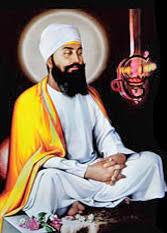
Guru Tegh Bahadur - we are indebted to him

We have heard of people dying for their country, their religion, their family, etc. Have you heard of anybody who died for the freedom of others who are not his own community? Not of his own religion? That requires an extraordinary level of unselfishness, rarely seen in humans. The life of Guru Tegh Bahadur is one example where we see the remarkable courage and the ultimate limit of unselfishness.

Guru Tegh Bahadur (1 April 1621 – 11 November 1675) became the 9th Guru of Sikhism on 20 March 1665, following the footsteps of his grand-nephew, Guru Har Krishan. The details regarding his early life and the achievements during his Guruship are available at wikipedia and sikiwiki. The aim of this article is slightly different: to highlight the immense level of unselfishness displayed by the Guru as he chose for his martyrdom at the hands of moghuls ruling India at that time.

Read the complete Article: Guru Tegh Bahadur - we are indebted to him

Friday, July 16, 2010

A Fine Management Lesson

Here below is a nice lesson.......

Old one but still interesting to read…

One fine day, a bus driver went to the bus garage, started his bus, and drove off along the route. No problems for the first few stops - a few people got on, a few got off, and things went generally well.

At the next stop, however, a big hulk like Pathan got in. Six feet four, built like a wrestler, arms hanging down to the ground. He glared at the conductor and said, "Pathan doesn't pay!" and sat down at the back.

Conductor didn't argue with Pathan, but he wasn't happy about it. The next day the same thing happened, Pathan got on again, made a show of refusing to pay, and sat down. And the next day, and the next..

This grated on the bus driver, who started losing sleep over the way Pathan was taking advantage of poor conductor. Finally he could stand it no longer. He signed up for body building courses, karate, judo, and all that good stuff.

By the end of the summer, he had become quite strong; what's more, he felt really good about himself. So, on the next Monday, when Pathan once again got on the bus and said, "Pathan doesn't pay!"

The driver stood up, glared back at Pathan, and screamed, "And why not?"

With a surprised look on his face, Pathan replied, "Pathan has a bus pass."

Management Lesson:

Be sure there is a problem in the first place before working.

Contributed by: Poonam

Thursday, July 8, 2010

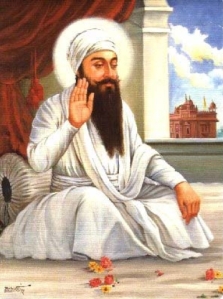
Forbear, forgive - Guru Arjan Dev


Guru Arjan Dev (born in Amritsar, Punjab, India on 15 April 1563 and martyred in 1606 at Lahore, Punjab) is the fifth of the Ten Sikh Gurus. He embraced martyrdom against mughal tyranny on 16 June 1606.

Guru Arjan Dev was head of Sikhism for a quarter of a century and accomplished a lot during his regime. He completed the construction of the temple at Amritsar and founded other cities such as Taran Taran and Kartarpur. He constructed a Baoli at Lahore. The most important work of Arjan Dev was the compilation of Adi Granth. He collected all the work of the first four Gurus and dictated it in the form of verses in 1604.

Read the complete article: Forbear, forgive - Guru Arjan Dev

Saturday, July 3, 2010

A good story

Friends: I read the following story at www.citehr.com. There you may generate your user ID and password and get several such stories. Now the story...

Once a king called upon all of his wise men and asked them, ” Is there a mantra or suggestion which works in every situation, in every circumstances, in every place and in every time. In every joy, every sorrow, every defeat and every victory? One answer for all questions? Something which can help me when none of you is available to advise me? Tell me is there any mantra?”

All the wise men were puzzled by the King’s question. They thought and thought. After a lengthy discussion, an old man suggested something which appealed to all of them. They went to the king and gave him something written on paper, with a condition that the king was not to see it out of curiosity.

Only in extreme danger, when the King finds himself alone and there seems to be no way, only then he can see it. The King put the papers under his Diamond ring.

Some time later, the neighbors attacked the Kingdom. King and his army fought bravely but lost the battle. The King had to flee on his horse. The enemies were following him. getting closer and closer. Suddenly the King found himself standing at the end of the road - that road was not going anywhere. Underneath there was a rocky valley thousand feet deep. If he jumped into it, he would be finished…and he could not return because it was a small road…the sound of enemy’s horses was approaching fast. The King became restless. There seemed to be no way.

Then suddenly he saw the Diamond in his ring shining in the sun, and he remembered the message hidden in the ring. He opened the diamond and read the message. The message was - ” THIS TOO SHALL PASS”

The King read it . Again read it. Suddenly something struck him- Yes ! This too will pass. Only a few days ago, I was enjoying my kingdom. I was the mightiest of all the Kings. Yet today, the Kingdom and all his pleasure have gone. I am here trying to escape from enemies. Like those days of luxuries have gone, this day of danger too will pass. A calm came on his face. He kept standing there. The place where he was standing was full of natural beauty. He had never known that such a beautiful place was also a part of his Kingdom.

The revelation of the message had a great effect on him. He relaxed and forgot about those following him. After a few minutes he realized that the noise of the horses and the enemy coming was receding. They moved into some other part of the mountains and were near him.

The King was very brave. He reorganized his army and fought again. He defeated the enemy and regained his empire. When he returned to his empire after victory, he was received with much fanfare. The whole capital was rejoicing in the victory.

Everyone was in a festive mood. Flowers were being showered on King from every house, from every corner. People were dancing and singing. For a moment King said to himself,” I am one of the bravest and greatest King. It is not easy to defeat me. With all the reception and celebration he saw an ego emerging in him.

Suddenly the Diamond of his ring flashed in the sunlight and reminded him of the message. He open it and read it again: “THIS TOO SHALL PASS”.

He became silent. His face went through a total change - from the egoist he moved to a state of utter humbleness. If this too is going to pass, it is not yours. The defeat was not yours, the victory is not yours. You are just a watcher. Everything passes by. We are witnesses of all this. We are the perceivers. Life comes and goes. Happiness comes and goes. Sorrow comes and goes.

Now as you have read this story, just sit silently and evaluate your own life. This too will pass. Think of the moments of joy and victory in your life. Think of the moment of Sorrow and defeat. Are they permanent? They all come and pass away.

Life just passes away. There is nothing permanent in this world. Everything changes except the law of change. Think over it from your own perspective. You have seen all the changes. You have survived all setbacks, all defeats and all sorrows. All have passed away. The problems in the present, they too will pass away. Because nothing remains forever. Joy and sorrow are the two faces of the same coin. They both will pass away.

You are just a witness of change. Experience it, understand it, and enjoy the present moment - this too shall pass........!!!

Poonam